numbers and benchmarks
What One Empty Hygiene Hour Costs a Two Chair Practice
An open hygiene hour is not free time, it is paid time. Here is how to build the cost of one from your own payroll, rent, and fee schedule, then find how many filled gaps cover a slow week.
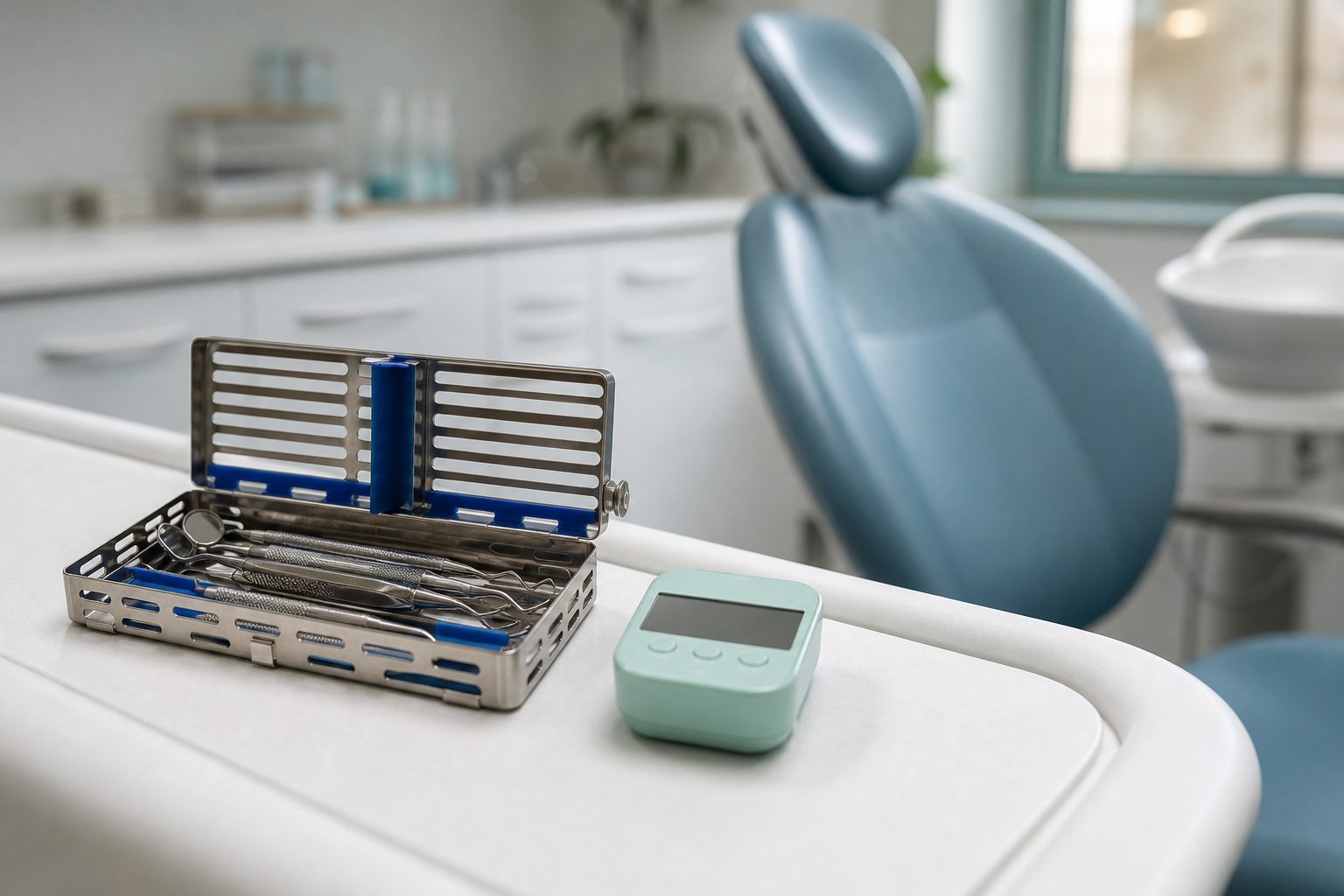
The Costs That Keep Running While the Chair Sits Empty
When a hygiene patient cancels or fails to show, the costs of that lost hour do not disappear. The practice still pays staff, maintains equipment, heats or cools the office, and keeps the lights on. There is no pause button for overhead or payroll. For the small, independent practice with two hygiene chairs, every open slot is not just lost revenue but a real out-of-pocket expense.
It is easy to think of an empty hour as a missed opportunity, but it is more accurate to see it as an hour when costs are paid out without any offsetting income. The invisible drain accumulates fast, especially when hygiene gaps recur week after week. Understanding the mechanics of these costs is the first step to putting a true dollar value on each empty slot in the hygiene schedule.
To build a precise calculation for your own office, start by listing the expenses that continue, minute by minute, whether the chair is full or vacant. In most practices, these include staff wages and benefits, employer payroll taxes, rent and utilities, depreciation or lease costs for equipment, and consumable supplies. Some costs, such as electricity or water, might dip slightly with a missed patient, but the majority remain fixed or nearly so during office hours.
Keep reading: A Day at the Front Desk: How Tomorrow's Schedule Falls Apart
Hygienist Wage, Payroll Taxes, and Benefits Per Clinical Hour
Wages are usually the largest direct cost for each hygiene hour. Most hygienists are paid either hourly or on a daily rate, regardless of how many patients they see. Even if the schedule falls apart, payroll must be met. To estimate this cost, use your own pay structure: hourly wage or daily rate, plus the employer share of payroll taxes and any benefits provided.
Calculating the Loaded Wage
For an hourly-paid hygienist, take the base hourly wage and add the employer portion of Social Security, Medicare, and unemployment insurance. Many offices also offer paid time off, health insurance, and sometimes retirement contributions. These can be annualized, then divided by typical clinical hours to find a per-hour figure. For example, if a hygienist makes $45 per hour and the employer pays 8 percent for payroll taxes and $3 per hour worth of benefits, the loaded wage is $45 plus $3.60 plus $3, or $51.60 per hour.
Paid Time Off and Downtime
Remember that paid time off, sick leave, or non-clinical hours for training must be allocated over clinical hours, not just hours spent with patients. If a hygienist is paid for 2,000 hours a year but only 1,800 are scheduled with patients, the real per-clinical-hour cost goes up. This matters when calculating what each empty hour truly costs the office.
Rent, Equipment, and Sterilization Allocated by Chair Hour
Occupancy costs are the next largest expense category. The rent or mortgage, utilities, property taxes, and insurance all continue whether or not a patient is in the chair. To assign these costs to each hygiene hour, first find the total cost per month, then break it down per operatory and per clinical hour.
Calculating Per Chair, Per Hour Facility Cost
If your practice pays $3,000 per month in rent and utilities, and each chair is scheduled for 32 hours a week, that is roughly 128 hygiene chair hours per month for a two-chair practice (32 hours per week times 2 chairs times 2 weeks, then adjust for actual open days). Divide the rent and utilities by this number to get an average facility cost per hygiene hour. This does not account for front office, storage, or shared spaces, but gives a useful working estimate for chair time.
Equipment Depreciation and Maintenance
Chairs, units, digital sensors, and sterilizers all have a useful lifespan. Add the annual depreciation or lease cost for this equipment, plus planned maintenance and repairs. Divide this sum by the number of clinical hygiene hours per year to allocate a per-hour figure. Even if a chair sits empty, its cost continues to accrue over time, not by patient volume.
Sterilization and Consumables
Most sterilization costs, such as utilities, machine maintenance, and staff time, are relatively fixed per hour. Consumable costs (barrier wraps, prophy paste, gauze) are patient-dependent and saved when a slot is empty, but these are small compared to the fixed costs already described.
Keep reading: How to Run a Same Week Hygiene Gap Fill in a Small Practice
Production Per Hygiene Hour: Prophy, Radiographs, Fluoride, Perio
To understand the lost income from an empty hour, look at your average hygiene production per clinical hour. Many offices track this for each hygienist. Tally the usual mix of services: adult or child prophy, bitewing or panoramic radiographs, fluoride varnish, and periodic exams. Some hours may include periodontal maintenance or scaling and root planing, which are higher fee procedures.
Case Mix and Production Benchmarks
Every practice's hygiene mix will be different. In a general practice, a typical hygiene hour might include one adult prophy, bitewing x-rays, and a doctor exam. Some hours will be more basic, some will include additional services. Calculate your production per hygiene hour by dividing total hygiene revenue for the month by the number of clinical hygiene hours worked.
This average is the realistic gross revenue lost each time a hygiene hour goes unfilled. It is important to use your own production reports, not national averages, as case mix and fee schedules vary widely by region and patient base.
PPO Write Offs and Why the Gross Fee Is the Wrong Number
Most independent practices contract with one or more PPO dental plans. The "usual and customary" fee on your schedule is rarely the amount collected. Instead, PPO contracts require you to accept a reduced fee for covered services, sometimes 20 to 40 percent below your standard fee.
Net Production Versus Gross Fee
When calculating the real value of a filled hygiene hour, use the net production: what you actually collect after PPO adjustments. For example, if your standard adult prophy is billed at $110 but your largest PPO pays $70, the lower amount is what counts for lost revenue. Add radiograph and exam reimbursements at the PPO rate as well. In most small practices, the majority of patients are not paying the gross fee, so using that number overstates the value of a filled slot.
Also consider no-shows and same-day cancellations. Some practices charge a fee, but most do not collect it, and few offices rely on these charges to offset lost production. Treat any cancellation or open slot as a net loss.
See how ChairGap handles this for dental practices
Building the Calculation With Numbers From Your Own Practice
To find the true cost of one empty hygiene hour, gather these figures from your own records:
- Hygienist hourly wage plus employer payroll taxes and benefits, allocated per clinical hour
- Monthly facility costs (rent, utilities, insurance) divided by number of hygiene chair hours per month
- Annual equipment depreciation or lease divided by clinical hygiene hours per year
- Average net production per hygiene hour, using PPO-adjusted collections, not billed fees
Add up the wage, facility, and equipment costs per hour. This is your "hard cost" for each empty hygiene slot. Next, use your average net production per hygiene hour to see the total missed revenue for each gap in the schedule. The sum of hard cost plus lost net production is the true impact of an empty hour on your bottom line.
For example, if your loaded hygienist wage is $52 per hour and your facility and equipment cost is $16 per hour, your out-of-pocket cost is $68 for every empty hour. If your average net production per hygiene hour is $140, the combined effect of a gap is $208. Over a week, a few missed hours add up quickly, often erasing the profit from busier days.
Break Even: How Many Filled Gaps Cover One Slow Week
To understand the larger impact of hygiene gaps, look at the week as a whole. If your practice has 32 hygiene hours on the schedule but loses five to cancellations or no-shows, multiply your per-hour cost and lost production by five. In this scenario, the practice is not just missing out on extra income, it is directly paying out hundreds of dollars for empty time.
Calculate how many of these gaps you need to fill to bring the week back to break even. If every filled hour brings in $140 of net production and offsets $68 in hard costs, each reactivated patient narrows the loss. Fill three out of five gaps, and you cut your loss by more than half. Fill all five, and the week's numbers are back on track.
Consistent recall follow-up and rapid gap filling can make the difference between a profitable and a break-even week. Many independent practices now use tools that combine overdue recall lists with fast, one-tap SMS reactivation and same-week gap filling. These systems help keep the hygiene schedule full with less manual effort, letting owners and managers focus on patients rather than chasing open slots.

A Day at the Front Desk: How Tomorrow's Schedule Falls Apart
Follow one front desk from the first voicemail to the last confirmation call and watch where tomorrow's hygiene column loses its patients, hour by hour, in a small independent dental office.

How to Run a Same Week Hygiene Gap Fill in a Small Practice
A step by step routine for turning tomorrow's two open hygiene slots into seated patients, from pulling the overdue list before the first appointment to confirming the last seat by mid afternoon.
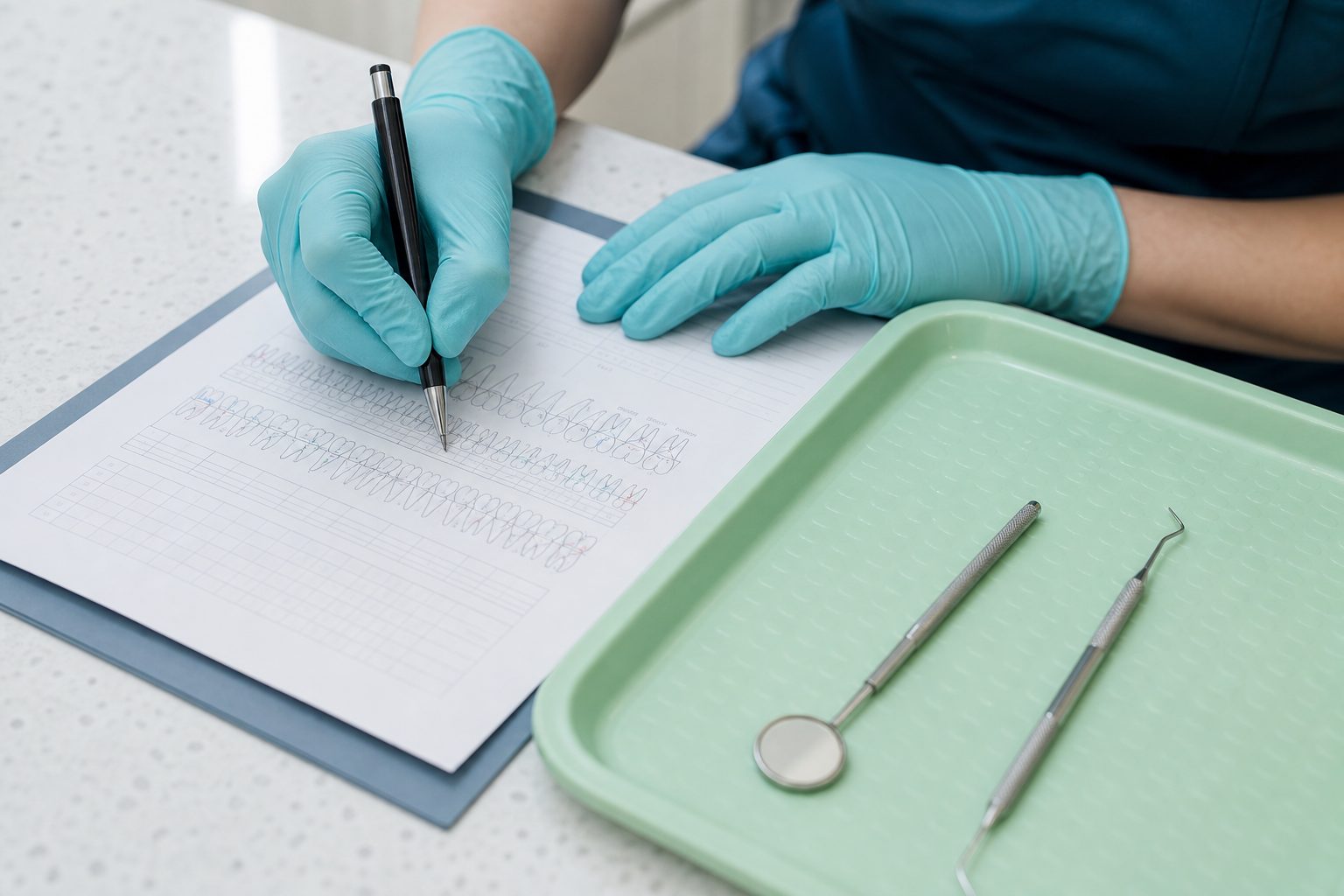
D1110, D4346, and D4910: Which Hygiene Code Fits Which Patient
Three hygiene codes, three different patients. Here is what each one requires in the chart, how plans treat frequency, and how the code you choose sets the recall interval you will schedule.